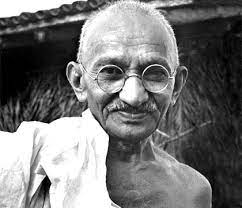
Mohandas Gandhi was born on October 2, 1869, in India. At that time, India was ruled by Great Britain, an island nation approximately 5,000 miles away. After a long struggle led by Gandhi, India became an independent nation in 1947.
Gandhi was very shy when he was young. He ran to school so he would not have to talk to anyone. Gandhi said, "My books and my lessons were sole companions."
Gandhi felt safe and loved at home. His father taught him to respect all people, no matter their religion. The Gandhi's were hindus, but many of Gandhi's father's friends were Muslims. From his mother, Gandhi learned that keeping his word was the most important thing a person could do.
Gandhi went to high school when he was 12 years old. He learned to read English, write English, and speak English. He won prizes won prizes for his schoolwork. Gandhi did not like to play sports, but he enjoyed long walks.
Gandhi's life changed when he was 13. His parents arranged for him to be married! Gandhi's young bride was Kasturba. Gandhi and Kasturba stayed married until she died more than 60 years later. They raised four sons together.
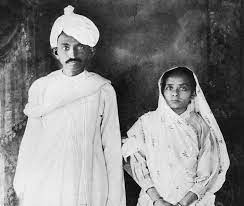
Gandhi finished high school in 1887 and went to England to become a lawyer. In 1893, Gandhi went to South Africa to work in a law firm. South Africa changed Gandhi's life. There he learned the leadership skills to peacefully guide India to independence. One day Gandhi was riding a train. he had a first-class ticket. A white man refused to ride with the brown-skinned Gandhi. Gandhi would not move and was pushed off the train. After this experience, Gandhi promised to fight for the rights of Indians in South Africa. And he did. He wrote newspaper articles protesting discrimination against people of color. He demanded equal treatment under the law. Gandhi gained a lot of support for his views and began to build a strong following.
Gandhi believed he could peacefully change unfair laws. He called his nonviolent idea satyagraha, which means "truth and firmness." Gandhi and thousands of his followers were put in jail for these beliefs. But, finally the government did change many of the unfair laws.
Gandhi was a hero when he returned to India in 1915. He was called Mahatma, or " Great Soul," for his work in South Africa. Gandhi decided to use satyagraha to help Indians gain their independence from Britain.
Gandhi traveled around India meeting people. He spun his own cotton to make his clothes. He peacefully helped farmers get fair pay for their crops.
He helped factory workers get paid more, too. Gandhi vowed not to eat until the workers got better pay. Newspapers told Gandhi's story. Millions of people worried about Gandhi's health. Finally, the factory owners gave in. Fasting became part of Gandhi's nonviolent satyagraha movement.
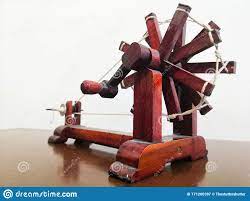
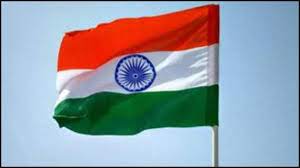
In 1921, Gandhi became head of the Indian national congress. He and his followers worked to peacefully gain self-rule for India. Gandhi encouraged Indians to weave their own cotton clothes so they wouldn't have to buy expensive British cloth. Each day, Gandhi spun yards of thread on a spinning wheel. Gandhi's simple spinning wheel became a symbol of the Indian struggle for self-rule. Today, the shape of a spinning wheel is on India's flag.
The British rulers, however, were upset with the independence movement. Gandhi and thousands of his peaceful followers were put in jail for their protests against the British. Gandhi read when he was in jail. He wrote. He prayed. He spun cotton thread. And he fasted. Once he went without food for 21 days. People around the world were again concerned about Gandhi's health.
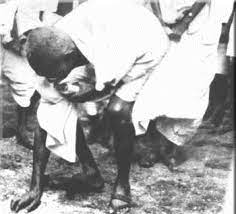
Gandhi knew he had to highlight India's struggle for independence, so he decided to peacefully protest for British salt laws. These laws made it illegal for Indians to make salt or sell salt. Indians had to buy expensive British salt, even though free sea salt could be gathered at the seashore.
Gandhi walked 240 miles to the coast. Thousands of Indians joined him on his salt march. People around the world followed Gandhi's heroic march to the sea. Gandhi reached the shore and picked up sea salt. Before long, he and 50,000 of his followers were jailed for breaking the salt laws. Gandhi said, "I want world sympathy in this battle of right against might." Slowly, Gandhi's right overcame Britain's might. India finally became independent on august 15, 1947. Over the decades of struggle, Gandhi spent 2,089 days in Indian jails.