Frederick Douglass was born in tuckahoe, Maryland February 14, 1817. his Mother's Name was Harriet Bailey, and Frederick's real name was Frederick Augustus Washington bailey. He changed his name to Frederick Douglass after he escaped from slavery. As Frederick Douglass, he became the best-known African American antislavery leader in America.
Frederick was raised by his grandmother until the age of 6. Then he was separated from her. Frederick's mother lived on another farm, Twelve miles away. he rarely got to see his mother. Frederick's mother die when he was only 7 years old. Frederick never knew his father.
Young Frederick worked on his owner's farm. He brought the cows to their barn in the evening. He chased chickens out of the garden. He cleaned the yard and ran errands. But he was often hungry and cold. He had no shoes, socks, pants or jackets. He wore a long shirt that reached his knees. On winter night's Frederick stole a large cloth bag and slept in it.
Frederick went to live in Baltimore when he was 8 years old. He was still a slave, but he had more freedom. And he had his first pair of pants. Frederick's life changed in another way at this time. He discovered reading and writing. His new mistress even taught him a few letters and how to spell some short words. But her husband thought that teaching Frederick would spoil him as a slave. And teaching a slave to read was against the law

Frederick was determined to learn to read. He learned more letters from his young white friends. Later, As an author, Frederick wrote, "During this time, My copy-book was the board fence, brick wall, and pavement; my pen and ink was a lamp of chalk." From these difficult beginnings, Frederick would go on to write 3 books and work on a number of news papers, including 2 he started.
In Baltimore, Frederick saw African Americans who were not slaves. They were free to live their own lives. Frederick began to dream about being free himself. He wrote, "I was now about 12 years old, and the thought of being a slave for life began to bear heavily upon my heart." Unfortunately, Frederick was sent to another farm to work. He hated and rebelled against it. Mr. Covey, the farmer, beat him.
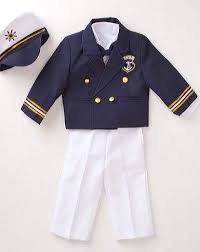
One day when Mr. Covey hit him Frederick fought back. The men battled for 2 hours. Mr. Covey never hit Frederick again. Frederick wrote, "This battle with Mr. Covey was the turning-point in my career as a slave." Frederick tried to escape twice, but was caught. On his third try, dressed as a sailor Frederick escaped to new Bedford, Massachusetts. Although officially he still belonged to his owner, Frederick was free at last. To keep Mr. Covey from finding him, Frederick changed his last name from Bailey to Stanley to Johnson and finally to Douglass.
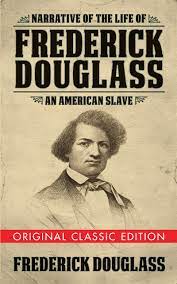
In Massachusetts, Frederick read the liberator, A newspaper dedicated to ending slavery. He realized that many people were working to end slavery. One day, Frederick spoke at an antislavery rally. He talked about his life as a slave and his daring escape. People were excited by what Frederick said. Frederick spoke at more meetings. More people heard him. Some people, However, Did not believe that an escaped slave could read and speak as well as Frederick Douglass did. They doubted he had ever been a slave. So , in 1845, he wrote Narrative of the life of Frederick Douglass, An American Slave. More people read Frederick's story and joined the fight against slavery.
Frederick's popularity brought danger. Because Frederick was so well known, he worried that his owner in Maryland would find him and take him back into slavery. Frederick went to england, where slavery had been abolished. He gave many more speeches. In 1846, English friends raised 750 dollars to buy Frederick's freedom. At last, Frederick Douglass was Truly free.
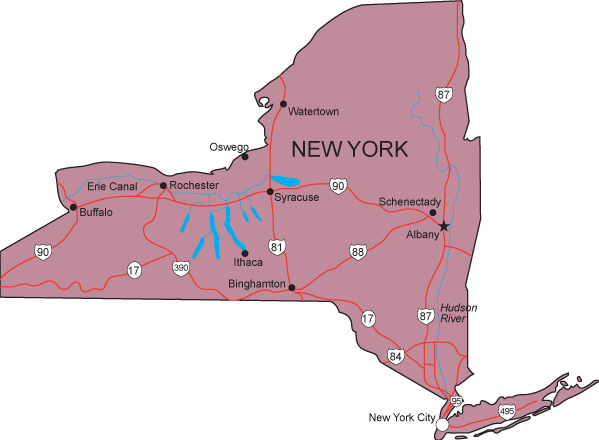
Frederick returned to America and continued his antislavery work. He gave more speeches stating that "The white man's happiness cannot be purchased by the black man's misery." He started the North Star news paper to write against slavery. He spoke and wrote about equal rights for women, too. He and his family ran a station on the underground railroad in Rochester, New York, to help slaves escape to freedom. During the civil war, Frederick met with President Abraham Lincoln. He urged Lincoln to free the slaves and to let the African Americans join the union army.