Sojourner truth was born a slave around 1797. She never knew her birthday, because slaves birthdays were often not written down. Her parents named her Isabella. Her last name was that of her owner, Johannes Hardenbergh. one day, Isabella Hardenbergh would become the famous antislavery and women's rights leader Sojourner Truth.
Isabella's parents loved her very much. They all lived on Hardenbergh's farm, near the Hudson River in New York state. Isabella knew only one of her brothers. The rest of her brothers and sisters had been sold to other owners. Her parents Often told her stories about her missing siblings.
When Isabella was 9 years old, she was sold to John Neely for $100. Mr. Neely was extremely mean to Isabella. in 1810, she was sold to John Dumont. She was Mr. Dumont's slave for 16 years.
Isabella worked hard for her new owner. She plowed, planted, and harvested his fields. Mr. Dumont said, "She could do as much work as half a dozen...people." But Isabella did not benefit from her hard labor. She was still a slave.
Isabella's parents loved her very much. They all lived on Hardenbergh's farm, near the Hudson River in New York state. Isabella knew only one of her brothers. The rest of her brothers and sisters had been sold to other owners. Her parents Often told her stories about her missing siblings.
When Isabella was 9 years old, she was sold to John Neely for $100. Mr. Neely was extremely mean to Isabella. in 1810, she was sold to John Dumont. She was Mr. Dumont's slave for 16 years.

Because she was a slave, Isabella never had a chance to go to school. She never learned to read or write. She memorized songs and parts of the bible that she heard. When she was eighteen, Mr. Dumont made Isabella marry tom, another one of his slaves Isabella and Tom had five children. As children of slaves, they were slaves, too.
One day, Isabella heard very good news. All slaves in New York state would be freed on July 4, 1827. Mr. Dumont promised to free Isabella a year earlier, on July 4, 1826. But when the date arrived, Mr. Dumont broke his promise to Isabella. He did not free her. So Isabella decided to free herself. It was a hard decision for Isabella because she could take only one of her children with her. She chose the baby, Sophia, since she was too young to be left behind.
Early one morning, Isabella put Sophia on her hip and walked away as fast as she could. But Mr. Dumont caught up with her. Mr. Dumont claimed that Isabella had run away from him. Isabella said, "no, I did not run away; I walked away by daylight, and all because you had promised me a year of my time." A neighbor who disliked slavery said he would pay Isabella for the rest of the year. Mr. Dumont agreed.
on July 4, 1827, Isabella was finally free! Isabella worked for many different people over the next fifteen years. Then, in 1843, Isabella made 2 big decisions. She began traveling to tell people about god. And she changed her name to Sojourner truth. She took this name because sojourner means "traveler," and she felt that her calling was to spread the truth as she traveled to different places. Sojourner went to religious meetings where she spoke about god. She quoted verses from the bible. She sang songs people knew and songs she had made up. She listened to other preachers. Sojourner took great joy in having children read the bible to her.
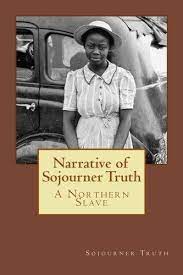
Several years later, Sojourner met Frederick Douglas, a former slave. Douglass was already famous for his work to end slavery. He was well known for his books about his days as a slave. Sojourner decided she wanted a book about her life. She told her story to a friend who wrote it down. In 1850, Sojourner's book- The narrative of Sojourner Truth: A northern Slave- was published. Sojourner traveled the country preaching, signing, selling her book, and speaking out against slavery. She often said, "The truth is powerful and will prevail."
Sojourner's life took a new turn this time around. she was invited to speak for the women's rights. Sojourner gave her best speech on May 28, 1851, at a national women's rights convention in Akron, Ohio. Sojourner said, "I am for a woman's rights. I have as much muscle as any man, and can do as much work as any man. I have plowed and reaped and husked and chopped and mowed." she urged American men to give all American women their rights.
During the civil war, Sojourner worked to get African Americans the right to fight in the union army. She set up a training camp for soldiers. In Washington, D.C., she helped freed slaves establish new lives. And she visited president Abraham Lincoln in the White House.